








 Call
Call 

 Access Your Account
 What Is Symmetrical Internet and Do You Need It?

Table of Contents
If you’re shopping for internet plans, you’ve likely come across the term “symmetrical speeds” or “symmetrical internet.” Unless you work in IT or you love tech, you probably don’t know what that means. “Symmetrical” is one of the most meaningful technical distinctions in home internet, and understanding it can help you choose between internet providers and find internet plans that match the way you use the internet.
[search_block]
The Basics
Symmetrical internet means your upload speed and your download speed are the same. If you’re on a 500 Mbps symmetrical plan, you get 500 Mbps going in both directions. That sounds simple, but it’s quite different from how most home internet connections work.
To understand why it matters, it helps to know what upload and download speeds do.
When you stream Age of Attraction on Netflix, load Amazon to buy your paper towels, or download Ella Langley’s new album on Spotify, you’re pulling data down from the internet to your device. That’s your download speed at work.
When you send an email with attachments, hop on a Zoom call for work, post a video to Instagram, back up photos to the cloud, or livestream your COD game, you’re pushing data up from your device to the internet. That’s your upload speed.
Why Most Internet Connections Are Asymmetrical
Most home internet connections (cable, DSL, and fixed wireless) are asymmetrical, which is a fancy way of saying the download speeds far exceed the upload speeds. For example, a cable plan that offers 1 Gbps usually means 1 Gbps of download speeds (the upload speeds are more like 35-50 Mbps). That gap isn’t a cost-cutting move on the internet providers’ end; it’s an infrastructure design that is rooted in how people used to use the internet. In 2005, people weren’t uploading to TikTok and YouTube, so upload speeds weren’t as important.
Cable and DSL networks are built on copper infrastructure, which was designed for television and telephone signals. Bandwidth on these networks is finite and shared among users (that is why your internet speed slows down around 6 pm-11 pm when all your neighbors are home). Historically, the vast majority of home internet traffic was download-heavy: people watched video, browsed the web, and consumed far more content than they created. So providers allocated most of the available capacity to download speeds, with only a sliver left for uploads.
That logic held up for years, until the internet changed. Now, your boss wants you to jump on Zoom calls all day, content creation has exploded, and cloud storage has become the default backup solution. Households also have far more people uploading simultaneously. The asymmetrical design that made sense in 2005 is a bottleneck in 2026.
The only way to get symmetrical speeds
Fiber Is the Leader on Symmetrical Speeds
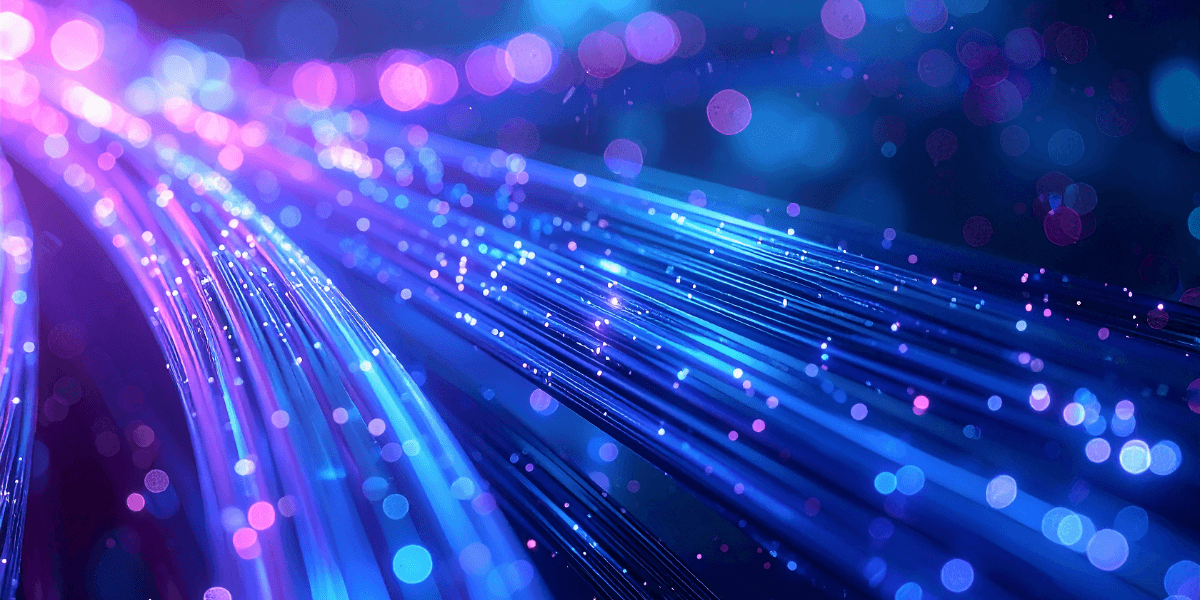
Fiber internet transmits data as pulses of light through thin glass or plastic strands rather than as electrical signals through copper wire (like cable and DSL). Light can carry enormous amounts of information in both directions without the interference and signal degradation that limit copper-based systems. There is no electromagnetic interference, no signal loss over distance, and no shared bandwidth bottleneck as cable networks experience.
Fiber’s physical properties enable equal upload and download capacity without sacrificing performance in either direction. Cable and DSL providers cannot simply decide to offer symmetrical speeds on their existing networks because the copper infrastructure does not support it without a complete rebuild.
This is why when you compare internet providers and look at which ones offer symmetrical plans, the list is almost entirely fiber providers. Google Fiber, Verizon Fios, AT&T Fiber, Frontier Fiber, and Quantum Fiber all offer symmetrical speeds on their fiber-optic plans. Hybrid Fiber Coaxial (HFC) providers like Xfinity and Spectrum, even on their gigabit plans, typically offer upload speeds that are a fraction of their download speeds.
Who Needs Symmetrical Internet?
Most people do not require symmetrical speeds. If your household browses the web, streams video, and does some light video calling, an asymmetrical plan with decent upload speeds (20-50 Mbps) is fine. The asymmetry only becomes a problem when upload demands are high and sustained.
Content creators who regularly upload large video files to YouTube, TikTok, or client servers will notice a dramatic difference with symmetrical speeds. A 10 GB video that takes 45 minutes to upload on a cable plan with 50 Mbps upload speeds can be done in a few minutes on a symmetrical gigabit connection. Livestreamers, whether gaming on Twitch, broadcasting events, or running live social media sessions, rely heavily on stable, fast upload speeds. Any dropped frames or buffering on a livestream is an upload speed problem, not a download one.
If you work from home and spend a lot of time on Zoom, Google Meet, or Teams, you might consider an upgrade to symmetrical internet.
If you’re a content creator, podcaster, or freelancer (graphic designers, IT, social media agency, etc.) and find yourself uploading a lot of content, files, and data, then symmetrical internet will benefit you.
Another scenario is if your home setup involves continuous cloud backup of photos, documents, or security camera footage. A fast and consistent upload channel makes a real difference in how quickly those backups complete and how little they interfere with other internet activity.
Three of The Best Symmetrical Internet Plans Available in 2026
If you have decided symmetrical internet is right for you, or you simply want the best internet plans available, here are the top fiber providers offering symmetrical speeds as of 2026. Pricing and availability vary by location, so always check what is offered at your specific address.
Google Fiber
Google Fiber is regarded as the top-rated fiber internet provider in the country, known for fast symmetrical speeds, transparent pricing, and exceptional customer service. Its entry-level 1 Gig plan starts at $70 per month and delivers symmetrical speeds up to 1,000 Mbps in both directions. Multi-gig plans are available in select cities, with speeds up to 8 Gbps. Google Fiber operates without data caps and with no promotional pricing that jumps after year one. The main limitation is availability.
Verizon Fios
Verizon Fios is a 100% fiber-optic network, and all its plans offer symmetrical upload and download speeds. Fios plans include no data caps, no contracts, and no equipment fees, and new customers frequently receive promotional offers, including gift cards and streaming trial subscriptions. Verizon customers who bundle home internet with a Verizon mobile plan can receive a monthly discount. The tradeoff is geographic coverage: Fios is primarily available in the Northeast and Mid-Atlantic states, so it is not an option for much of the country.
AT&T Fiber
AT&T Fiber offers the widest fiber coverage of any major provider, with service now reaching parts of 26 states and ongoing expansion toward 30 million locations by the end of 2026. All AT&T Fiber plans include no data caps, no contracts, and equipment at no extra charge. One of AT&T Fiber’s standout advantages is its price-lock guarantee: the rate you sign up at does not increase over time, which can lead to significant savings compared to cable providers whose introductory rates typically jump after 12 months. Customers who bundle with an eligible AT&T wireless plan can save monthly.

Beyond symmetrical speeds
Why Fiber Is Worth It Regardless
Symmetrical uploads are one compelling reason to choose fiber, but they are not the only one. Fiber internet, as a category, outperforms cable and DSL in nearly every meaningful dimension. Fiber connections are more reliable because they are not susceptible to the electrical interference that affects copper wire. They do not experience the neighborhood congestion slowdowns that cable users often notice during peak evening hours when everyone in the area is streaming at once. Fiber infrastructure also tends to hold up better during bad weather, since the signal does not degrade from moisture or temperature changes the way older copper networks can.
Latency is another area where fiber takes first place. Fiber connections deliver low latency, meaning less delay between your device sending a request and the internet responding.
Find Internet Providers Near You
Now that you know what symmetrical internet is, the next step is finding out which internet plans are available at your address. The easiest way to see all your options is to enter your zip code below. CompareInternet.com will show you every provider serving your location, including their current plans, speeds, and pricing, so you can compare internet providers side by side and find the best internet plan for your home.
[search_block]
Frequently Asked Questions
Is symmetrical internet worth the extra cost?
The upgrade to symmetrical fiber internet is worth it, but not strictly because of symmetrical speeds. Fiber plans with symmetrical speeds usually come from internet providers that also offer better reliability, no data caps, lower latency, and more stable long-term pricing than cable alternatives. If you work from home, create content, livestream, or frequently back up files to the cloud, symmetrical speeds add meaningful value on top of those other benefits.
Why does my hybrid fiber coaxial (HFC) internet have such slow upload speeds?
Hybrid Fiber Coaxial (HFC) internet uses a technology called DOCSIS, which transmits data over coaxial copper cable. The available bandwidth on this type of connection is divided between upstream and downstream channels, and historically, the vast majority of that capacity has been allocated to downloads because most consumer internet activity was download-heavy. Newer cable standards like DOCSIS 3.1 and the emerging DOCSIS 4.0 are beginning to improve upload capacity, but most cable providers have not yet deployed the hardware upgrades needed to take advantage of those improvements.
Sources
[1] Yahoo Tech. “Google Fiber Internet Review: Plans, Pricing, Speed and Availability"
[2] Reviews.org. “Best Fiber Internet Providers of 2026"
[3] AT&T. “Get the Fastest Fiber Internet Service | AT&T Fiber."