









 Call
Call 


 Access Your Account
 How Does Hybrid Fiber Coaxial (HFC) Internet Work?

Table of Contents
How does hybrid fiber coaxial (HFC) internet work? You’re not alone if you’ve stared at those black cables and wondered how it delivers your daily Great British Bakeoff binge. Hybrid Fiber Coaxial (HFC) internet powers millions of American households, but few people understand what’s happening behind those wall plates and black cables.
Hybrid Fiber Coaxial (HFC) internet isn’t just convenient—it’s a technological marvel hiding in plain sight. The same network that brings you hundreds of TV channels also delivers your favorite Netflix shows, video calls, and online shopping experiences. But how exactly does it work? And is it the right choice for your home?
What Is Hybrid Fiber Coaxial (HFC) Internet?
Hybrid Fiber Coaxial (HFC) internet is a broadband connection that uses the same coaxial cable network originally built for cable television service. Instead of limiting these powerful cables to just TV signals, internet service providers (ISPs) figured out how to send internet data through the same lines.
This clever use of existing infrastructure is why hybrid fiber coaxial (HFC) internet became widely available so quickly. If you already had cable TV service, getting internet through the same provider was a natural next step. The cable company didn’t need to build an entirely new network—they simply allocated a portion of the existing bandwidth for internet data.
Today, hybrid fiber coaxial (HFC) internet reaches download speeds of up to 1,000 megabits per second (Mbps) or even higher in some areas. That’s enough bandwidth to stream 4K videos, play online games, and simultaneously support dozens of connected devices.
The basics
How Hybrid Fiber Coaxial (HFC) Internet Works
Hybrid Fiber Coaxial (HFC) internet operates on a surprisingly straightforward principle. Your internet service provider sends data signals directly to your home through the coaxial cable network.
- Your ISP connects to the internet backbone—massive, high-capacity networks that form the foundation of the global internet.
- These signals travel through fiber-optic lines to neighborhood connection points called “nodes."
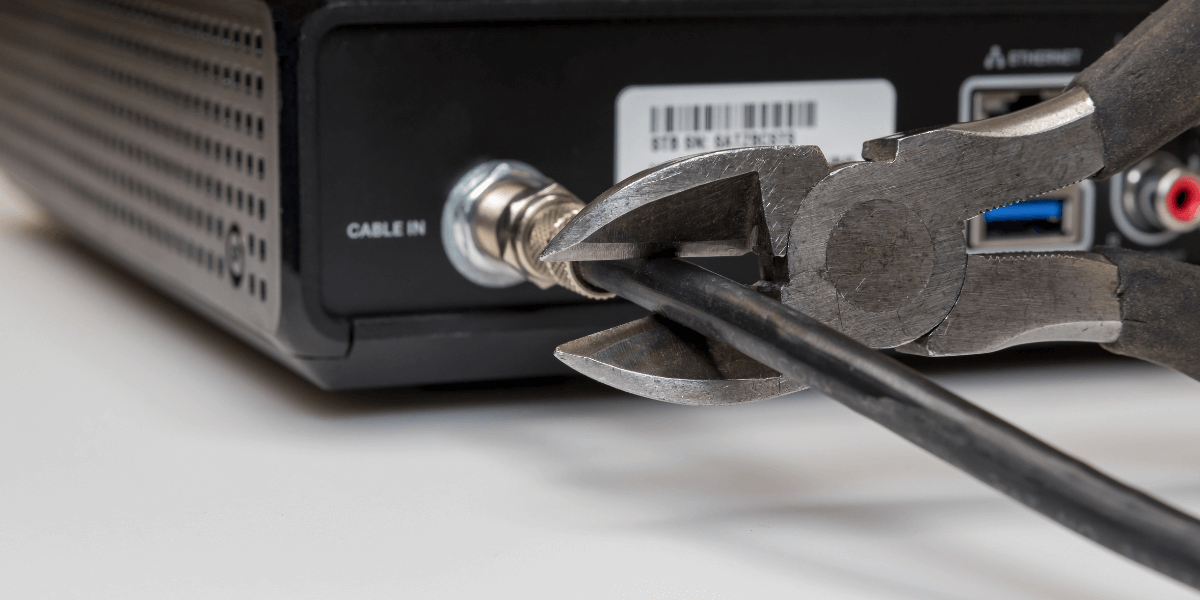
- Data travels the final stretch to your home from these nodes through coaxial cables—those round black cables with the pin in the middle.
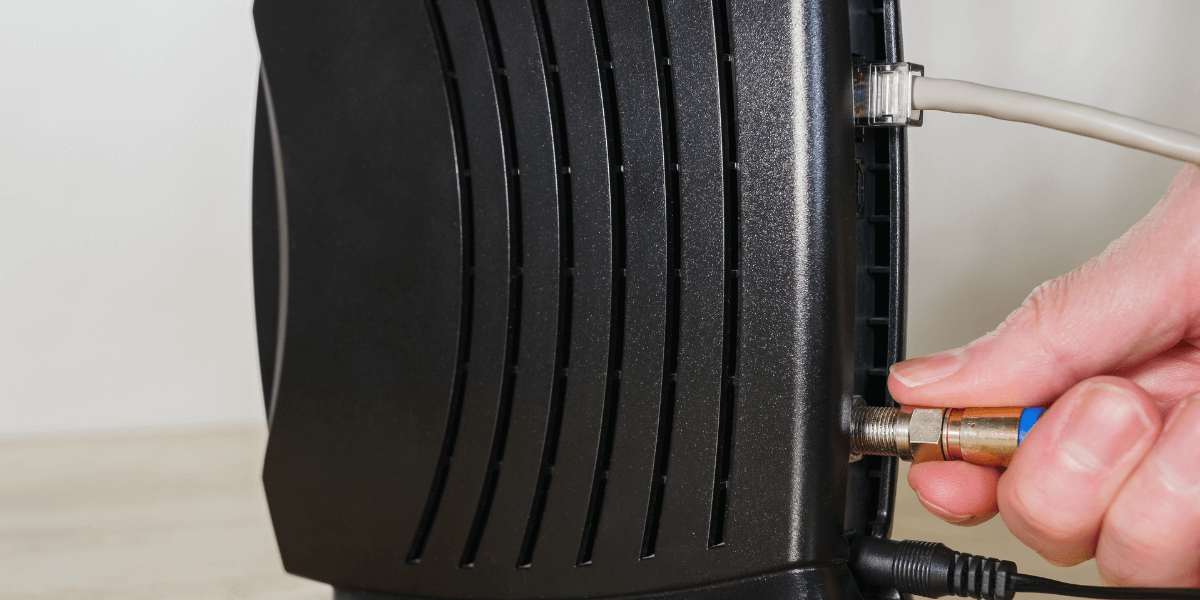
- Inside your home, the coaxial cable connects to your modem, translating the cable signals into data your devices can understand.
- Your modem then connects to your router (either as a separate device or as part of a combination unit called a gateway), which distributes the internet connection throughout your home via WiFi or Ethernet cables.
The beauty of this system is that cable networks have enormous bandwidth. Television signals use only a small portion of the cable’s capacity, leaving plenty of room for high-speed internet data to travel alongside your TV channels.
What you need
Hybrid Fiber Coaxial (HFC) Internet Equipment
Modem
A modem (short for modulator-demodulator) bridges your home and ISP networks. It takes the signal from your coaxial cable and converts it into digital data that your computers and devices can use. Think of it as a translator between two languages—the language of cable signals and digital devices.
Most modern modems support the DOCSIS standard (Data Over Cable Service Interface Specification), which determines the speed of your connection. The latest versions—DOCSIS 3.1 and the emerging DOCSIS 4.0—support gigabit speeds and beyond.
Router
While a modem brings internet into your home, a router distributes that connection to multiple devices. Routers create your home network and allow your devices to communicate with each other and share the internet connection.
Routers broadcast WiFi signals throughout your home, allowing wireless devices like smartphones, tablets, and laptops to connect. They also typically include Ethernet ports for wired connections, which are more reliable and faster than WiFi.
Gateway (Modem/Router Combo)
Many cable providers now offer gateway devices that combine a modem and router in a single unit. These all-in-one devices simplify setup and reduce cable clutter, though they sometimes offer fewer customization options than separate devices.
Coaxial Cables
These are the physical cables that carry the internet signal. They feature a copper core surrounded by insulating layers and a protective outer jacket. The distinctive round connector with a pin in the middle ensures a secure connection that can carry high-frequency signals with minimal interference.
Ethernet Cables
These cables connect your modem to your router (if they’re separate) and connect computers and other devices directly to your router for a faster, more reliable connection than WiFi. They look like oversized telephone cables with larger plastic connectors.
Understanding Hybrid Fiber Coaxial (HFC) Internet Speeds
Internet speed is usually measured in megabits per second (Mbps) or gigabits per second (Gbps). But what do these numbers mean for your online experience?
Download vs. Upload Speeds
Hybrid Fiber Coaxial (HFC) internet typically offers asymmetric speeds, meaning download speeds are much faster than upload speeds:
- Download speeds determine how quickly you can receive data, such as loading websites, streaming videos, or downloading files. Hybrid Fiber Coaxial (HFC) internet excels here, with speeds ranging from 50 Mbps to 1,000 Mbps (1 Gbps) or more.
- Upload speeds control how fast you can send data, such as photos to social media, email attachments, or video conferencing. Hybrid Fiber Coaxial (HFC) internet upload speeds are typically much lower, between 5 Mbps and 50 Mbps.
This asymmetry is one of hybrid fiber coaxial (HFC) internet’s limitations. The networks were initially designed primarily for downloading content (like TV shows), not for uploading. This is why people who frequently upload large files or host livestreams sometimes prefer fiber internet, which offers more balanced speeds.
Hybrid Fiber Coaxial (HFC) Internet vs. Other Internet Types
How does hybrid fiber coaxial (HFC) internet stack up against other connection types?
Cable vs. DSL
DSL (Digital Subscriber Line) uses existing telephone lines to deliver the internet:
- Speed: Cable is generally much faster, offering up to 1 Gbps compared to DSL’s typical 5-100 Mbps
- Availability: Both are widely available in urban and suburban areas
- Reliability: Cable typically offers more consistent speeds than DSL, which degrades over distance
- Price: DSL is often cheaper but delivers less value per dollar
Cable vs. Fiber
Fiber-optic internet uses advanced glass or plastic strands that transmit data as light pulses:
- Speed: Fiber can reach speeds of 10 Gbps, faster than most cable connections
- Symmetrical speeds: Fiber offers equal upload and download speeds
- Reliability: Fiber is less susceptible to interference and weather problems
- Availability: Fiber is still limited in many areas, while cable is more widespread
- Price: Premium fiber plans are often the most expensive option, though entry-level plans can be competitive with cable
Cable vs. Satellite
Satellite internet beams signals from orbiting satellites to a dish at your home:
- Speed: Cable is typically faster and more consistent
- Latency: Cable has significantly lower latency (delay), making it better for gaming and video calls
- Availability: Satellite works virtually anywhere with a clear view of the sky
- Weather resistance: Satellite can be affected by storms; cable is generally more weather-resistant
- Data caps: Satellite often has stricter data limits than cable
Cable vs. 5G Home Internet
The newest competitor, 5G home internet, uses cellular networks:
- Installation: 5G requires minimal equipment and no professional installation
- Portability: Some 5G services can move with you
- Coverage: 5G home internet is still limited to specific neighborhoods
- Reliability: Cable typically provides more consistent speeds
- Price: Comparable, though bundling options often make cable more attractive

The perks
Advantages of Hybrid Fiber Coaxial (HFC) Internet
Hybrid Fiber Coaxial (HFC) internet brings several significant benefits that have made it a popular choice:
Wide Availability
Cable TV infrastructure already exists in most urban and suburban areas. This extensive coverage means you likely have access to hybrid fiber coaxial (HFC) internet, no matter where you live outside of rural areas.
Fast Download Speeds
With download speeds ranging from 50 Mbps to 1 Gbps in many areas, hybrid fiber coaxial (HFC) internet easily handles streaming, gaming, and browsing across multiple devices simultaneously. The continued evolution of DOCSIS standards means cable speeds keep improving without requiring the installation of new cables.
Bundling Options
Many providers offer discounts when you bundle hybrid fiber coaxial (HFC) internet with TV service or phone lines. These bundles often represent significant savings compared to purchasing services separately and provide the convenience of a single bill.
Reliability
Unlike wireless options like satellite or cellular internet, cable connections aren’t significantly affected by weather conditions. The physical connection ensures a generally stable service with minimal interruptions, even during storms.
Limitations of Hybrid Fiber Coaxial (HFC) Internet
Slower Upload Speeds
As mentioned, hybrid fiber coaxial (HFC) internet typically offers asymmetrical speeds, with upload speeds much lower than download speeds. This limitation can affect videoconferencing, livestreaming, and uploading large files.
Shared Bandwidth
Since hybrid fiber coaxial (HFC) internet users in a neighborhood share bandwidth from the same node, speeds can slow down during peak usage times (typically evenings). This network congestion isn’t as much of an issue with fiber internet.
Service Area Limitations
While widely available in urban and suburban areas, hybrid fiber coaxial (HFC) internet often doesn’t reach rural locations where installing the infrastructure isn’t cost-effective for providers.
Data Caps
Some hybrid fiber coaxial (HFC) internet providers impose monthly data limits. You might face additional charges or reduced speeds if you exceed these caps. Always check whether a provider implements data caps before signing up.
The Future of Hybrid Fiber Coaxial (HFC) Internet
DOCSIS 4.0
The next generation of hybrid fiber coaxial (HFC) internet technology promises:
- Download speeds up to 10 Gbps
- Upload speeds up to 6 Gbps
- Lower latency for responsive gaming and video calls
- Better handling of network congestion
This upgrade will allow cable networks to compete with fiber for years without requiring entirely new infrastructure.
Increased Fiber Integration
Many cable companies are extending fiber deeper into their networks, creating hybrid systems that combine the best of both technologies:
- Fiber to neighborhood nodes or even to the curb
- Existing coaxial connections for the final stretch to homes
- The result: faster, more reliable service without completely replacing infrastructure
Smart Network Management
Advanced AI and machine learning are helping cable operators:
- Predict and prevent outages before they happen
- Optimize bandwidth allocation during peak usage
- Identify and fix signal problems automatically
- Provide more consistent performance across all users
These improvements mean hybrid fiber coaxial (HFC) internet will remain a robust option for most households well into the future, even as competing technologies emerge.
Find Hybrid Fiber Coaxial (HFC) Internet Providers in My Area!
Ready to explore hybrid fiber coaxial (HFC) internet options for your home? Finding the right provider is just a zip code away. Enter your zip code here to discover which hybrid fiber coaxial (HFC) internet providers are available in your neighborhood, along with their speeds, pricing, and special offers.
The perfect high-speed connection for your streaming, gaming, and work-from-home needs might be just a few clicks away. Don’t settle for slow, unreliable internet when cable’s powerful performance could transform your online experience. Check availability now and take the first step toward faster, more reliable internet service!
Sources
[1] Reviews.org. “How Cable Internet Works"
[2] Whatismyip.com. “Cable Internet"